Blogs
What's New Trending


 by Arzman Realtor
If you’re in the market for a new home or investment property, the Niagara region might be the perfect location for you. Known for its natural beauty, vibrant communities, and accessible real estate market, Niagara has quickly become a top choice for homebuyers. Whether you’re a first-time buyer or looking to upgrade, here are five compelling reasons why Niagara should be at the top of your list.

This forecast is written for homeowners, first-time buyers, seasoned investors and newcomers to the Niagara region who are trying to make informed real estate decisions in a shifting economic climate. Whether you are searching for homes in Niagara, exploring properties in Port Colborne or evaluating investment opportunities across the region, the insights below are tailored to your situation.
Niagara is not a single market — it is a collection of distinct communities, each with its own supply and demand dynamics. Understanding those nuances is what separates confident decisions from costly mistakes.
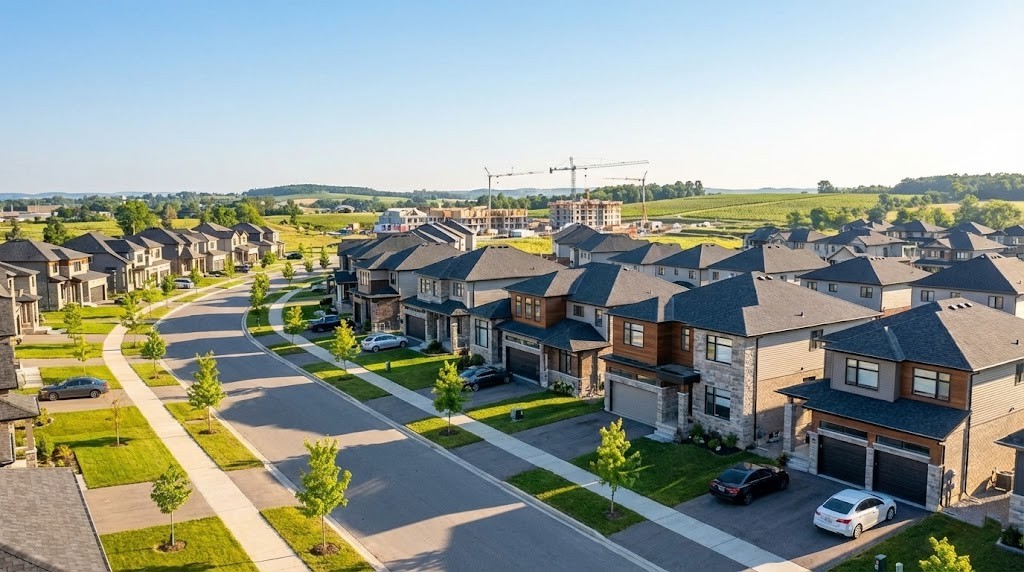
After years of rapid price escalation followed by a correction period, Niagara’s real estate market is entering a new phase of stabilisation and selective growth. Several converging forces are reshaping buyer and seller behaviour simultaneously:
| Community | Market Trend | Buyer Demand | Inventory | Key Driver |
|---|---|---|---|---|
| St. Catharines | ↑ Rising | High | Low–Moderate | Urban amenities, transit, healthcare hub |
| Niagara Falls | ↑ Rising | High | Low | Tourism economy, short-term rental demand |
| Welland | → Stable | Moderate–High | Moderate | Affordability, canal-side development |
| Fort Erie | ↑ Rising | Moderate | Low | Cross-border lifestyle, waterfront appeal |
| Port Colborne | ↑ Rising | Moderate | Very Low | Lakeside lifestyle, remote-worker migration |
| Thorold | → Stable | Moderate | Moderate | Brock University proximity, young families |
| Niagara-on-the-Lake | ◆ Premium | Selective | Very Low | Luxury market, wine country demand |
Each of these markets tells a different story. A buyer evaluating an investment property in Fort Erie faces a fundamentally different set of decisions than someone considering a property in Niagara Falls or a family home in Welland. Local knowledge matters more than regional generalisation.

For prospective buyers — particularly those moving from the GTA or returning to homeownership after sitting on the sidelines — 2026 presents a nuanced opportunity. Conditions are no longer as frenzied as the peak years, but they are not a traditional buyer’s market either.
Here is what buyers are navigating right now:
Trying to time the absolute bottom of any market is a losing strategy. What matters more is buying the right property, in the right location, for the right reasons — and understanding the long-term fundamentals of the community you are investing in. Niagara’s fundamentals remain compelling.

The market has shifted from pandemic-era intensity, but that does not mean sellers are at a disadvantage. It means that strategy matters more than it did when every listing received multiple offers within 24 hours.
In 2026, successful sellers are the ones who:
If you are considering selling your home in Niagara, the shift from reactive to strategic selling is the single most important mindset change for 2026. Working with an experienced brokerage like Quantum Team Realty ensures you have a dedicated team with deep local knowledge negotiating and marketing on your behalf.
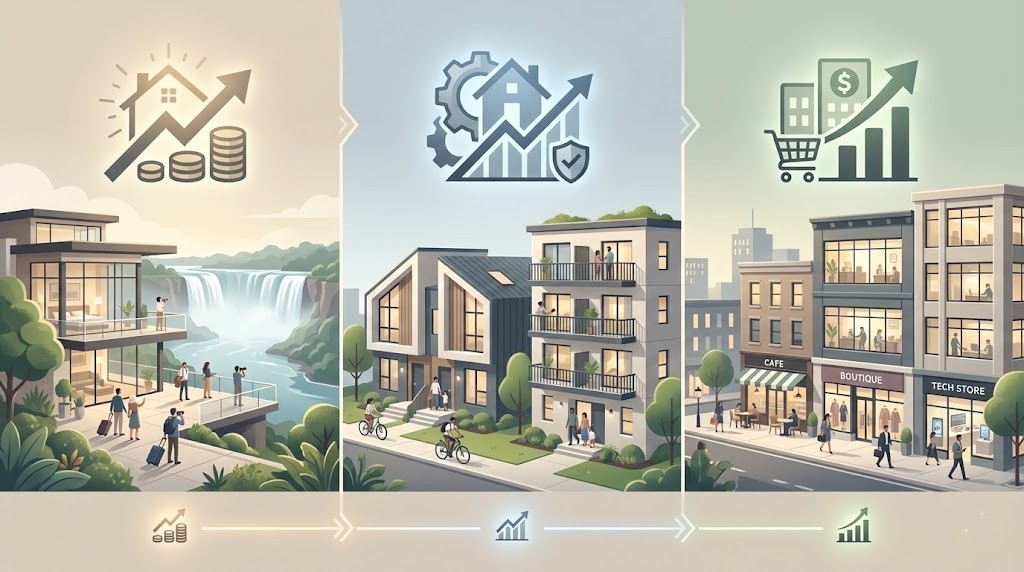
Niagara has always punched above its weight as an investment market relative to its price point. In 2026, several investment themes are emerging with particular clarity:
Niagara Falls and Niagara-on-the-Lake continue to generate strong tourist volumes. Properties positioned well for short-term rental platforms remain in demand among investors. Understanding local municipal STR regulations is essential before entering this segment.
Niagara’s growing population of students, young professionals and newcomers is sustaining consistent rental demand. Investors looking at duplexes, triplexes and purpose-built rental units are finding increasingly viable returns. Real estate investment opportunities in Niagara are growing in diversity and scale.
Growth in Niagara’s commercial corridor — particularly along key nodes in St. Catharines and Niagara Falls — is creating interesting acquisition opportunities for investors willing to hold through a development cycle. Commercial space in Niagara is increasingly attracting regional and national operators.
Navigating a market in transition requires more than listings data — it requires contextual guidance from people who understand Niagara at a granular level. At Arzman Real Estate, our team works across the full Niagara region, from Port Colborne to Thorold and everywhere in between.
We do not believe in pressure tactics or generic advice. Our approach is to understand your specific situation — your goals, your constraints, your timeline — and then provide honest, data-informed guidance that puts your best outcome first.
Whether you are a first-time buyer trying to understand what your dollar buys across Niagara communities, an experienced investor evaluating portfolio expansion, or a homeowner wondering whether now is the right moment to list — we are the team that knows this market deeply and speaks plainly about it.

Have questions about buying, selling or investing in Niagara in 2026? Our team is ready to listen first and guide second — no obligation, no pressure.
Yes, the Niagara region is experiencing growth, making it a promising market for both homebuyers and investors. Property values have been steadily increasing, and with new developments and infrastructure projects, this trend is likely to continue.
The cost of living in Niagara is generally lower than in larger urban centers like Toronto, making it an affordable option for families and individuals looking for more space and a better quality of life without the high expenses.
Some of the top areas for families in Niagara include St. Catharines, Niagara Falls, and Fort Erie. These areas are known for their excellent schools, safety, and family-friendly amenities.
Yes, Niagara offers a range of excellent public and private schools, as well as higher education institutions like Brock University and Niagara College.
Residents can enjoy a wide range of outdoor activities such as hiking, cycling, fishing, kayaking, skiing, and wine tours. The region is home to numerous parks, trails, and natural attractions like Niagara Falls and the Niagara Escarpment.